EverSeat Modular System
Modular child seat system designed to adapt across developmental stages while improving usability, sustainability, and structural performance.
Objective
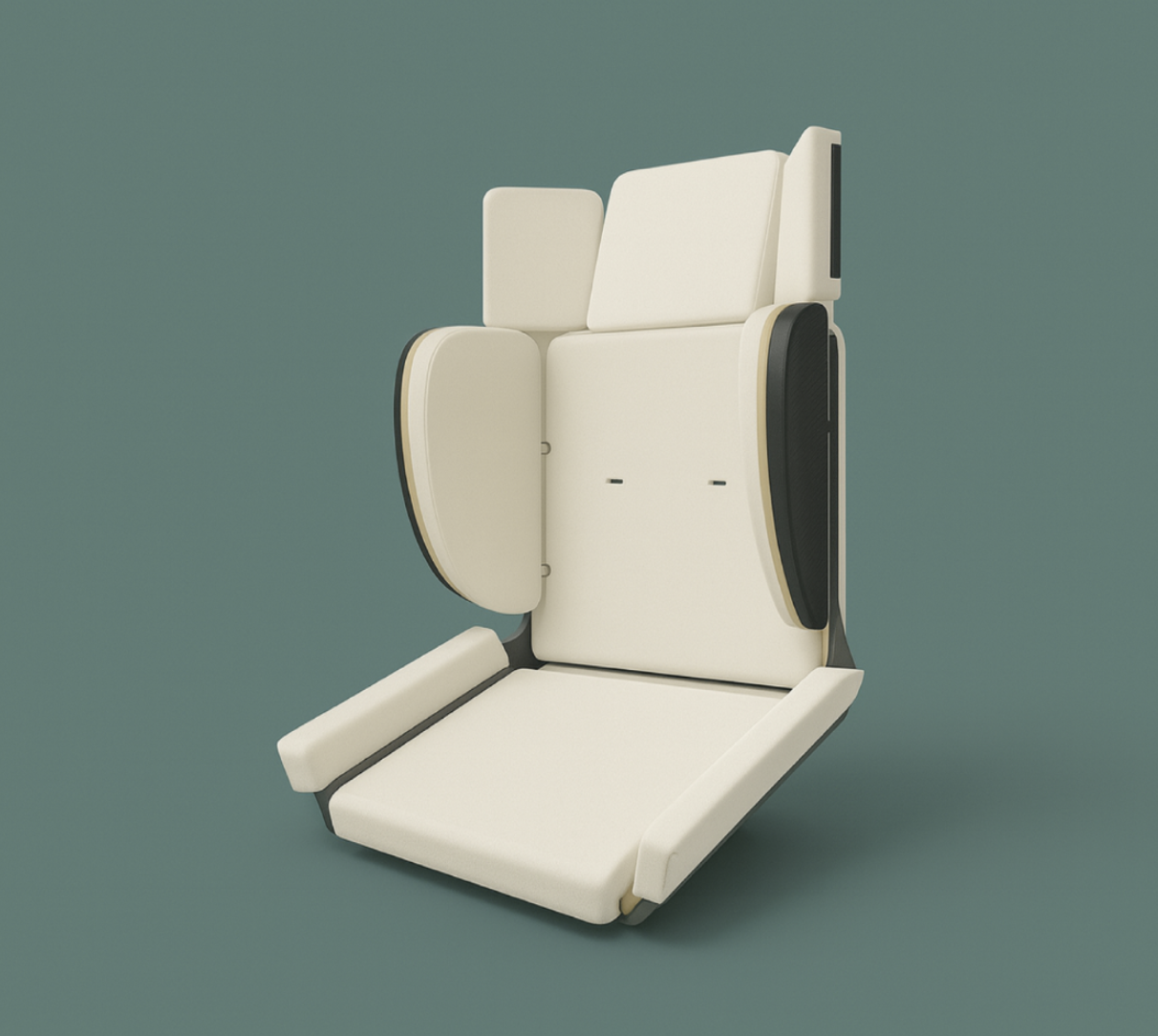
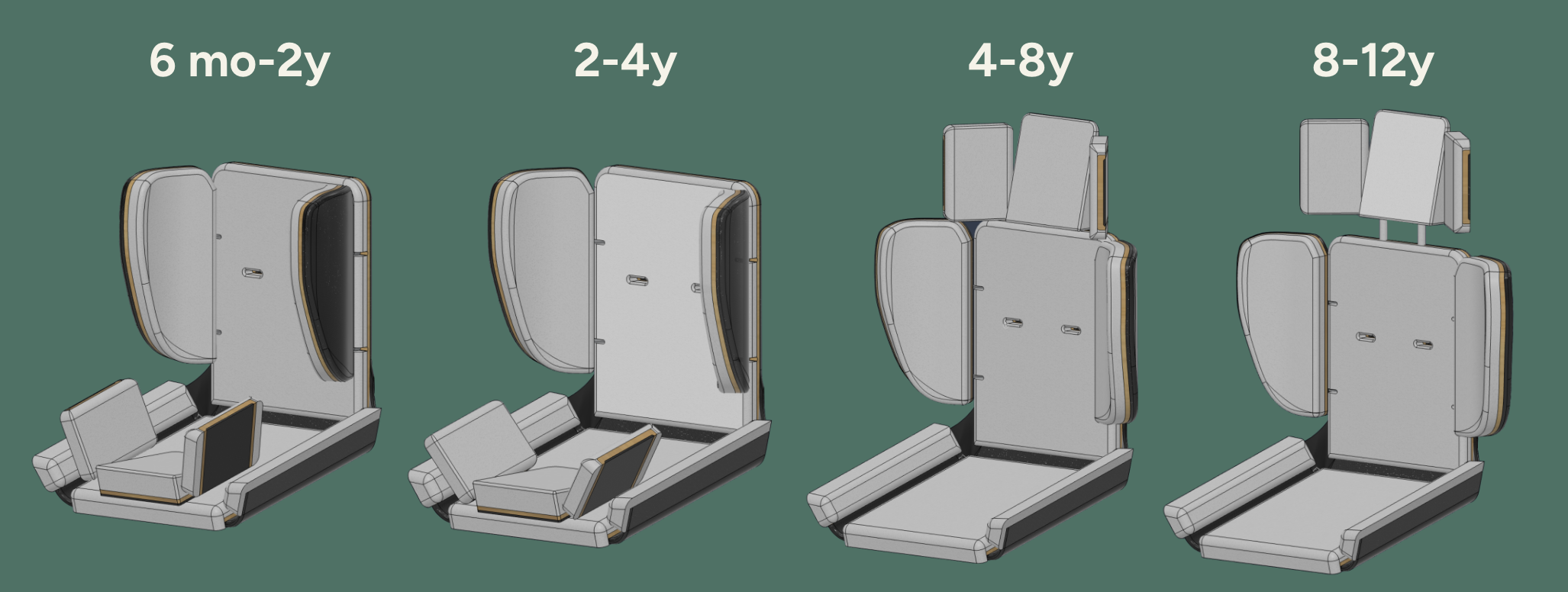
The primary objective of my capstone project, the EverSeat, was to safely restrain and protect children in vehicles from approximately six months through twelve years old using a single, adaptive system. Unlike traditional car seats that must be replaced multiple times as a child grows, the EverSeat was designed to evolve through modular reconfigurations, replacing the typical cycle of three to four seats with one long-term product. Additional objectives included improving caregiver accessibility through one-handed adjustments, enhancing comfort and ergonomic support across all age ranges, simplifying installation to reduce misuse, and reducing environmental waste by minimizing material replacement over the product’s lifespan.
Constraints
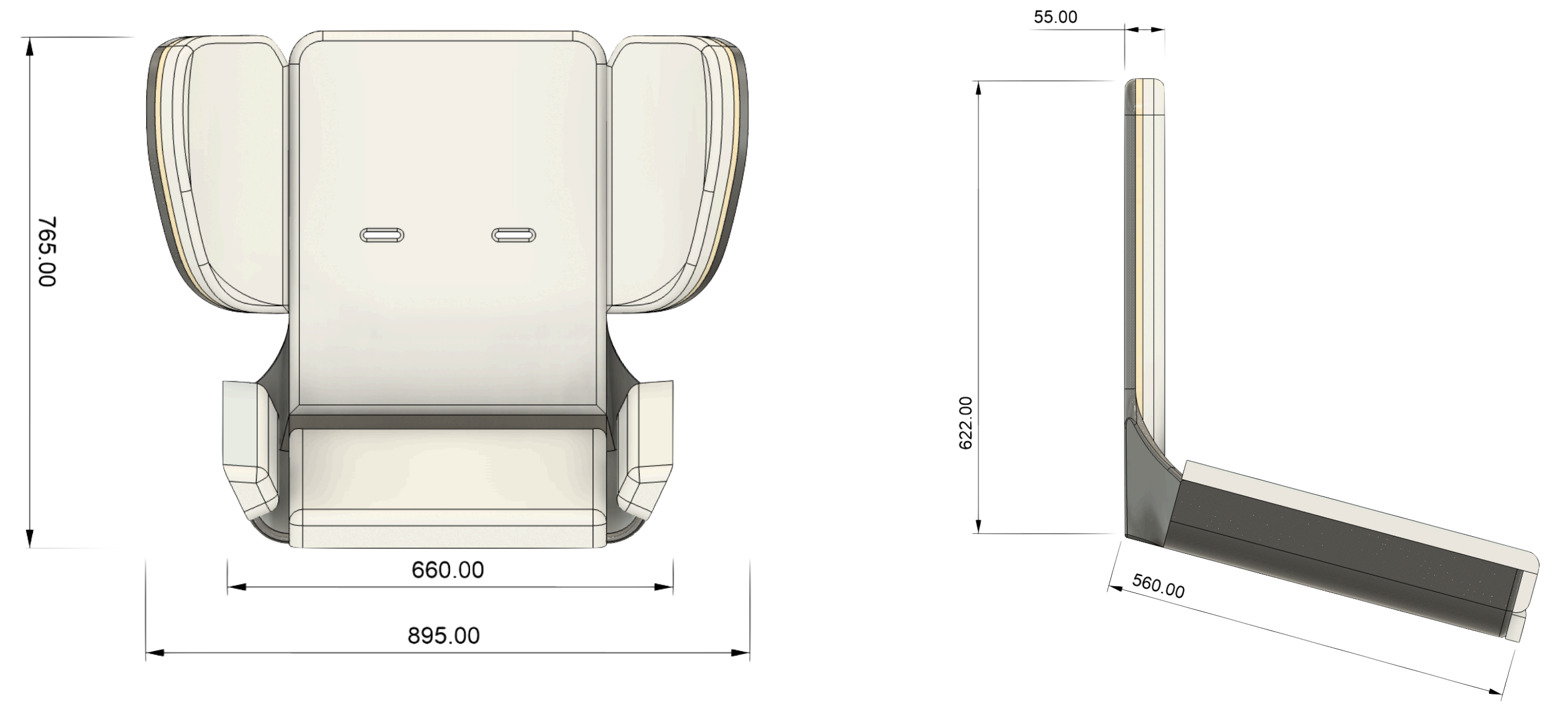
The design was constrained by the need to safely function across a wide range of child sizes and configurations while maintaining consistent structural performance over more than a decade of use. Vehicle compatibility imposed additional constraints, including compliance with standardized LATCH geometry and typical rear-seat dimensions. The system also needed to deliver meaningful sustainability improvements relative to existing car seats while remaining within a competitive premium-market price point, which directly influenced material selection, manufacturing processes, and part count.
Process and Methodology
The design process followed a structured, user-driven approach grounded in Quality Function Deployment (QFD) and Design Failure Mode and Effects Analysis (DFMEA). Caregiver survey data was translated into quantitative engineering requirements using a House of Quality, highlighting strong relationships between user priorities and technical features such as adjustable geometry, simplified interfaces, lighter construction, and machine-washable materials. DFMEA was used to identify and mitigate potential failure modes early, including two-handed operation, component misplacement, latch fatigue, and insufficient head and neck support. This combined QFD–DFMEA framework ensured that design decisions remained aligned with both customer needs and safety requirements throughout development.
Engineering Design and Architecture
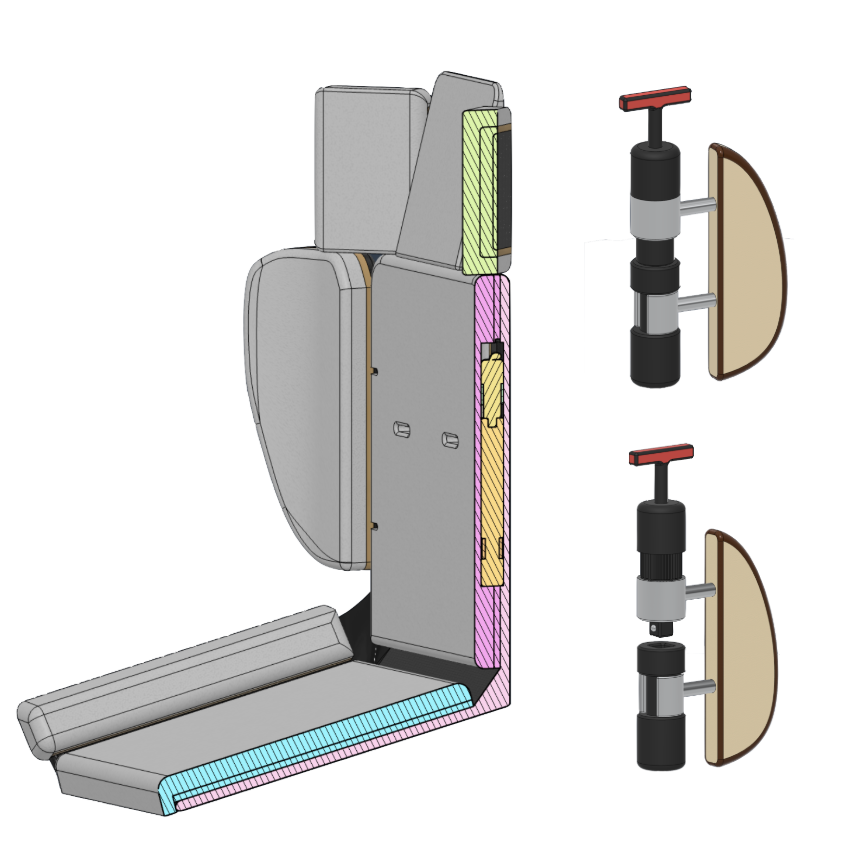
EverSeat was developed as a modular platform centered around a single structural frame with consistent mounting interfaces. Components were designed to be repurposed across developmental stages, such as a leg-rest module used during infancy that transitions into a headrest for older children. This platform approach reduced part count, simplified manufacturability, and minimized misuse during reconfiguration. Materials were selected to balance performance, sustainability, and comfort, including a carbon fiber structural shell for stiffness-to-weight efficiency, cork as a compliant intermediate layer, and bio-based polyurethane foam for impact energy absorption. Iterative CAD modeling was used to refine geometry, load paths, and adjustment mechanisms.
Analysis and Performance Outcomes
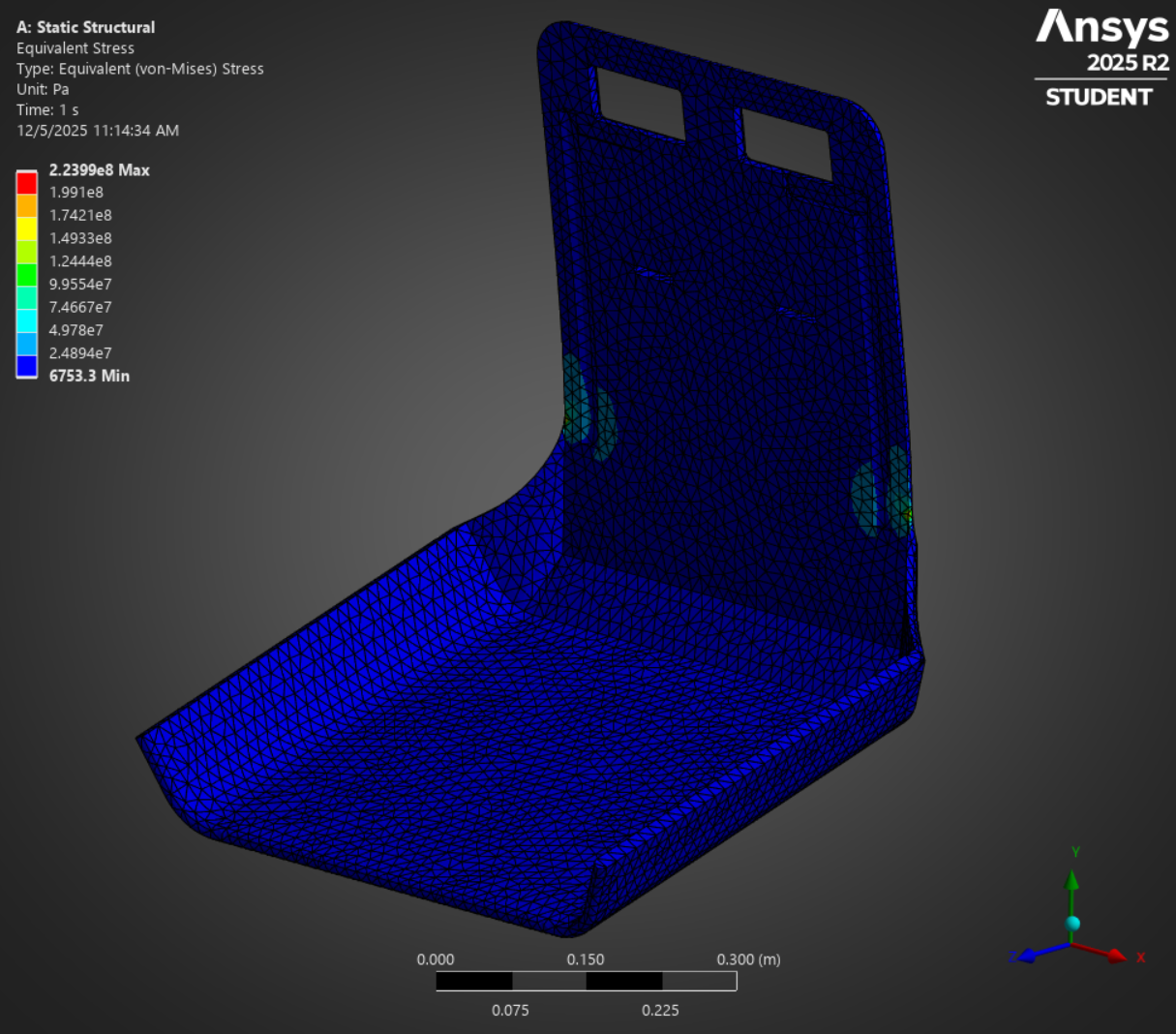
Structural performance was evaluated using ANSYS finite element simulations informed by FMVSS 213 frontal crash requirements. Simulations demonstrated that the design maintained acceptable factors of safety under crash-level loading across all configurations. The final system achieved a target weight of under 20 pounds, significantly improving accessibility and reducing physical strain during installation and handling. Lifecycle analysis using Sustainable Minds indicated a 47.9% reduction in CO₂ impact compared to traditional car seats, validating the environmental benefits of consolidating multiple products into a single adaptive system.
Contributions
I led the technical product design, including system architecture definition, CAD development, structural analysis, and safety verification through simulation. My work focused on translating user-defined requirements into a feasible mechanical system, validating structural integrity under regulatory loading conditions, and ensuring that modular adaptability did not compromise safety, reliability, or usability.